The Signal Your Data Co-op Calls a Purchase Event Was Defined by the Retailer Who Contributed It, Not by Your Campaign Category
Purchase signals inside data co-ops carry the contributing retailer's classification logic, which may not map to the buying behavior your campaign actually needs to find.
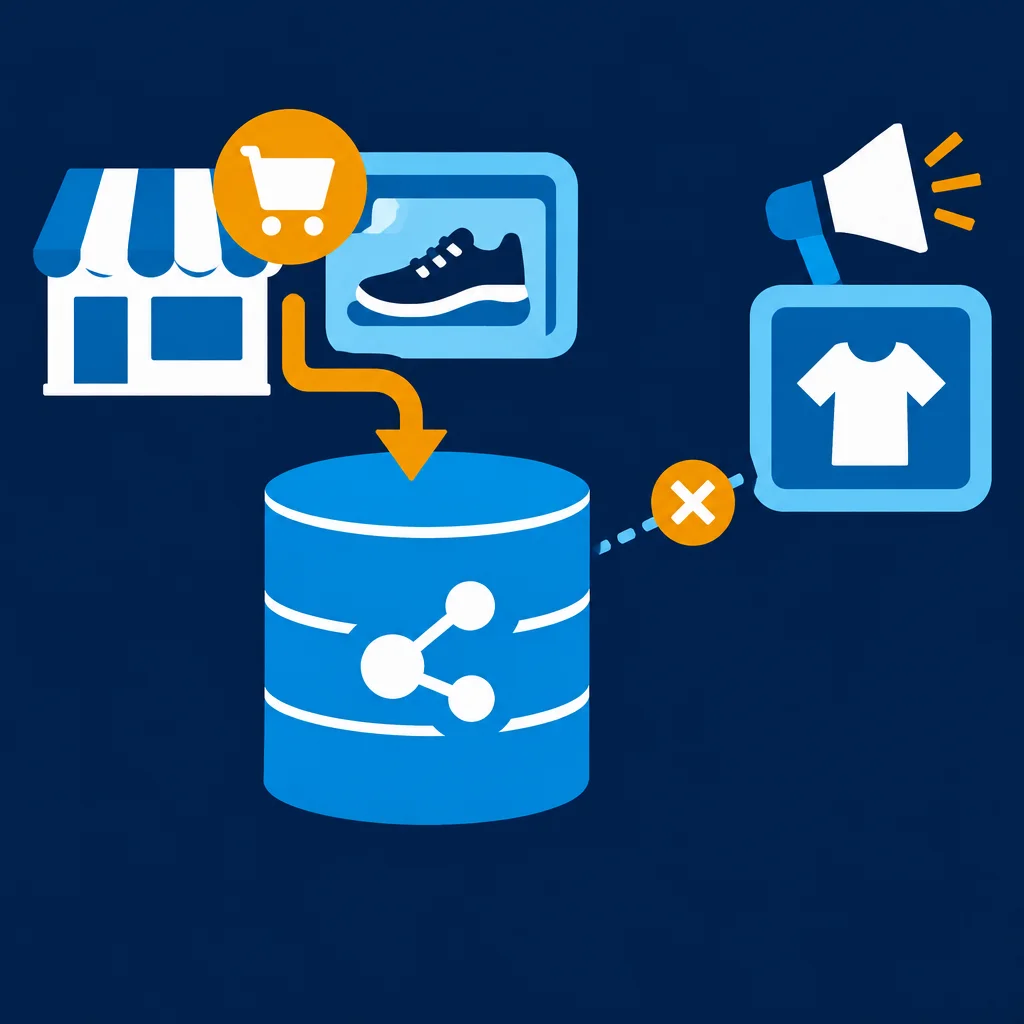
Data co-ops are often presented to media buyers as a shortcut to behavioral truth. The pitch is straightforward: contributing members pool their transaction and engagement records, the co-op resolves identity across those contributions, and the resulting signals tell you something real about what people actually do rather than what they claim to do in a survey. That framing is not wrong, but it skips a step that matters a great deal to anyone trying to reach a specific buying audience.
Every signal inside a co-op was originally created by the organization that contributed it. That organization decided what counted as a purchase event, how to label product categories, what threshold of activity qualified someone as an active buyer, and how recently a record had to occur before it was included. Those decisions were made for internal reporting purposes, not for the media buying use cases the co-op would eventually serve.
This means the word "purchase" inside a co-op audience is not a universal concept. It is a summary label sitting on top of many different retailer-specific definitions that may or may not resemble the buyer behavior you are trying to target.
Why category definitions vary more than buyers expect
Consider a hypothetical example. A buyer planning a campaign for a mid-tier kitchen appliance brand might license a co-op segment labeled something like "home goods purchasers" or "kitchen and cooking buyers." That segment could include records from a mass-market retailer who classified a $12 silicone spatula as a kitchen purchase, records from a home improvement chain who classified a countertop water filter as a home goods event, and records from a specialty cookware retailer who classified a $400 stand mixer as the same category.
The people behind those records are not the same buyer, and they are not in the same part of the purchase cycle relative to your product. But the co-op may have no mechanism to tell you which retailer's logic generated any given record inside the segment, and even if it did, the segment was likely sized and priced before anyone compared those definitions against your actual campaign goal.
The practical consequence is that the segment can look large and behaviorally specific while actually containing a wide range of purchase contexts that have little predictive value for your category.
How recency and frequency rules compound the problem
Beyond category definitions, co-op contributors also apply their own recency and frequency rules when they decide what to surface. One retailer might contribute purchase events from the past 18 months. Another might apply a rolling 90-day window. A third might contribute any recorded transaction regardless of how old it is, with recency filtering happening only at the segment query layer.
When those differently-aged signals get resolved into a single audience, the resulting segment does not have a clean behavioral profile. Some of the people inside it bought something relevant last month. Others had a single qualifying transaction two years ago. The segment count treats them equivalently because the co-op's membership logic sees them as the same type of record.
This matters for campaign planning because purchase recency is often the variable most correlated with continued buying intent. A segment built partly on stale events is not the same as one built on fresh events, even if both carry the same label and similar record counts.
What to ask before activating a co-op purchase segment
Before committing budget to a co-op audience built on purchase signals, it is worth asking a few operational questions that many buyers skip because the onboarding process moves quickly.
First, ask whether the co-op can describe the category taxonomy used to build the segment. Some co-ops maintain a published taxonomy that all contributing members map to. Others allow each contributor to self-classify. The difference matters because a shared taxonomy at least creates a consistent definition problem you can evaluate, while self-classification means the segment is a mixture of incompatible logic systems.
Second, ask about the recency distribution inside the segment. If the co-op can tell you what percentage of records fall within your preferred recency window, you can at least estimate how much of the segment reflects current buying behavior. If that information is not available, treat the segment as behaviorally older than its label implies.
Third, ask whether contributor identity is disclosed or whether the co-op operates on blind contribution. Blind contribution protects competitive data, which is a reasonable design choice, but it also means you cannot evaluate whether the contributing retailers are relevant to your category. A home goods segment contributed primarily by pet supply and sporting goods retailers who have loose category boundaries is a different asset than one contributed primarily by specialty kitchen and home decor channels.
Connecting co-op signal quality to measurement design
The category definition problem does not disappear once a campaign launches. It travels directly into your measurement results. If your co-op segment included buyers whose prior purchase behavior had little relationship to your product category, any lift or conversion signal you measure against that audience will be harder to interpret. You will not know whether a conversion came from someone who was a genuine prospect based on their behavioral history or from someone who happened to be in the segment for unrelated reasons.
One practical suggestion is to design a small holdout early in a co-op audience test, not primarily to measure incrementality in the traditional sense, but to give yourself a baseline for understanding how the audience responds relative to a broader open-market comparison. If the co-op segment does not outperform open targeting by a meaningful margin, that is useful evidence about whether the behavioral signal is adding real value or whether you are largely paying a premium for a label.
This kind of diagnostic thinking is easier to build in at the planning stage than to retrofit after a campaign has run and you are trying to explain results that did not meet expectations.
The underlying principle worth keeping in mind
Data co-ops are legitimate and often valuable tools for reaching audiences that would otherwise be difficult to address. The issue is not that co-op data is unreliable in some fundamental way. The issue is that the signals inside a co-op were created by contributing members for their own operational purposes, and those purposes were not your media campaign.
The gap between the signal as originally created and the signal as a media buyer interprets it is where targeting assumptions break down quietly. Understanding that gap before you size an audience or set a budget puts you in a materially better position to evaluate what a co-op segment can realistically do for your specific campaign goal.