The Data Clean Room Query You Design Determines Which Business Questions You Can Answer Before You Ever Run a Campaign
Clean room query structure is a planning decision that sets the ceiling on what measurement and audience insights the collaboration can return.
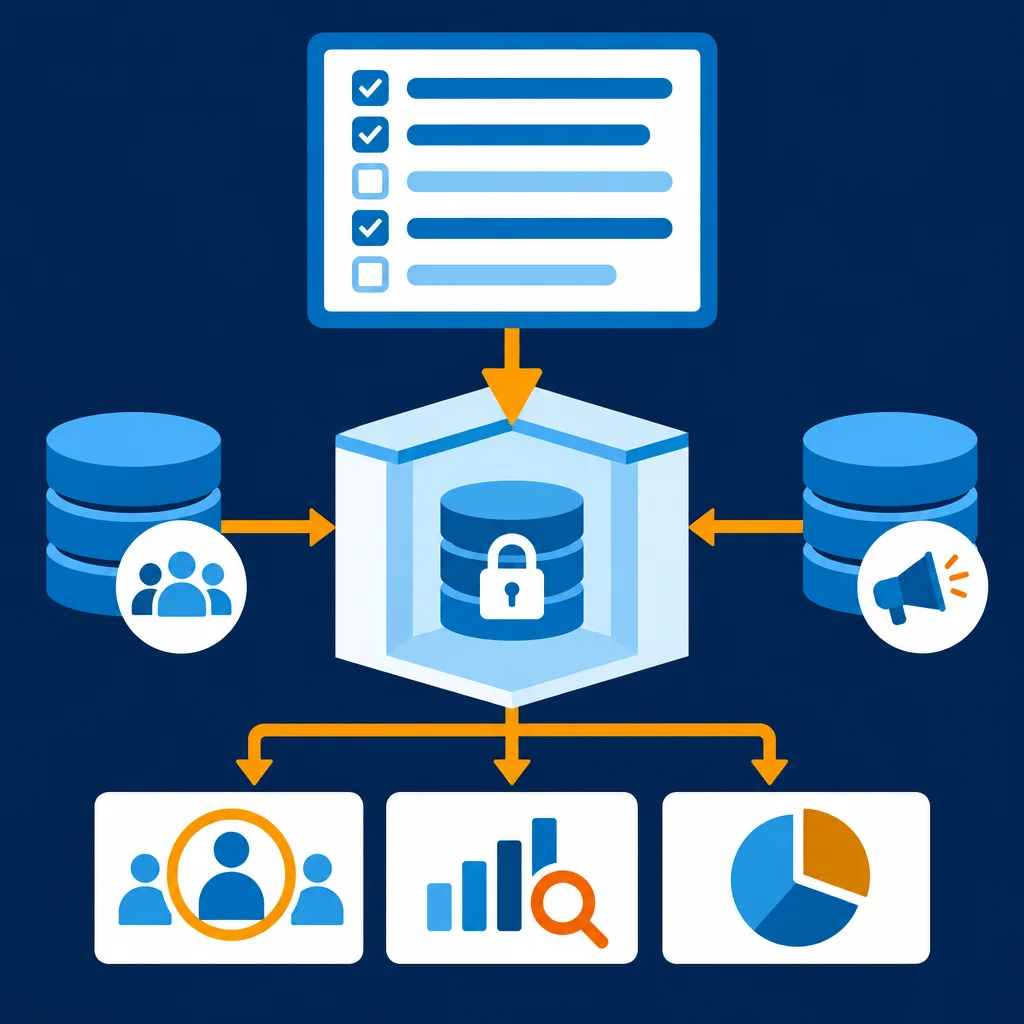
Data clean rooms have moved from pilot curiosity to standard infrastructure for brands running first-party data collaborations with publishers, retailers, and platform partners. Most of the conversation around clean rooms focuses on privacy compliance and match rates. Far less attention goes to a more foundational problem: the questions you can answer after a collaboration are determined almost entirely by the queries you design before activation begins.
This is not a technical edge case. It is a planning constraint that shapes the usefulness of every clean room engagement you run.
What a query actually does
A clean room query is a structured instruction that tells the collaboration environment how to join, aggregate, or compare records across two or more data sets without exposing individual-level data to either party. The query defines which fields participate in the join, which aggregation functions produce outputs, and which minimum thresholds determine whether a result is returned at all.
The result you get back is a direct product of how that query was written. If you designed a query to count overlap between your CRM segment and a publisher's registered audience, you will get a count. You will not automatically also get a breakdown of that overlap by product category, purchase recency, or household income band unless those fields were included in the query structure and the underlying data sets contain them.
This seems obvious stated plainly, but in practice it creates a common problem: brands run a clean room collaboration, receive a match count, make activation decisions based on that count, and then discover after the campaign that the measurement question they actually cared about cannot be answered because the query was never designed to capture it.
The gap between what you asked and what you needed
Consider a hypothetical where a grocery retailer and a streaming publisher agree to a clean room collaboration. The retailer wants to understand whether households exposed to streaming ads purchased in a specific category within thirty days. The initial query the team designs counts overlap between the exposed audience and purchasers in the retailer's transaction data. That query runs cleanly and returns a number.
The problem surfaces when the analytics team asks whether the lift was stronger among households who had not purchased in the category in the prior ninety days. That is an incrementality-adjacent question that requires a baseline population field to be part of the query design from the start. If the query did not include a field flagging prior-category purchase status, and if the collaboration agreement did not specify that field as an available input, the clean room environment has no way to produce that output after the fact. Retroactive query expansion is often impossible without renegotiating data access or re-running ingestion.
Why this happens at the planning stage
Clean room query design is usually handled by data engineering or analytics teams working from a brief that describes the campaign goal at a high level. The brief often says something like "measure campaign impact on purchase." That instruction is not wrong, but it is not specific enough to produce a query architecture that supports the full range of business questions a campaign might generate.
The business questions that matter most to media buyers and marketing leaders tend to involve comparisons: exposed versus unexposed, new buyers versus repeat buyers, high-frequency versus low-frequency segment members. Each comparison requires that both sides of the comparison exist as defined fields or population flags within the query structure. If those definitions are missing, the comparison cannot be computed.
A practical suggestion is to work backward from the decision you expect to make after the campaign. If the decision is whether to shift budget toward a specific audience subset, the query needs to be able to surface performance by that subset. Write that decision down before the query is drafted, and confirm that the fields required to support it are available in both data sets and included in the collaboration agreement.
Privacy thresholds add another layer
Clean room environments impose minimum cell-size thresholds to prevent re-identification. Results that aggregate fewer than a defined number of records are suppressed and returned as null or below-threshold. This threshold is a privacy protection, and it is appropriate, but it has a direct effect on the granularity of questions you can answer.
If you want to analyze performance for a narrow audience segment, and that segment does not meet the threshold in a given output cell, you will receive no result for that cell. This is not a data quality failure; it is the system working as intended. But it does mean that query design needs to anticipate whether the audience subgroups you want to analyze are large enough to clear the threshold in the environment you are using.
Different clean room platforms set different thresholds. Some are configurable within limits. Knowing the threshold before you design queries lets you decide whether a planned comparison is feasible or whether segments need to be broadened to produce reportable output.
Matching query design to activation goals
Clean rooms are used for two broad purposes: audience building ahead of activation, and measurement after a campaign runs. The query design requirements for each purpose are different, and conflating them produces gaps in both.
For audience building, queries need to produce stable, actionable segment definitions that can be passed to an activation partner. The fields that matter are those that define segment membership. For measurement, queries need to produce population comparisons that map to the outcome the campaign was hired to move. The fields that matter are behavioral and transactional outcomes over defined time windows.
Running both purposes through the same query design session, with the same fields, often means neither purpose is served well. A practical suggestion is to treat audience-building queries and measurement queries as separate planning workstreams, even when they run inside the same clean room environment against the same underlying data.
The collaboration agreement as a query constraint
The legal and commercial agreement governing a clean room collaboration defines which data fields each party makes available to the shared environment. Fields that are not enumerated in the agreement cannot be used in queries, regardless of what is technically possible in the platform.
This means that query design and agreement negotiation need to happen in parallel, not sequentially. If the analytics team designs queries after the agreement is signed, they may discover that fields required for a key business question were not included in the data sharing schedule. Adding them requires reopening the agreement, which takes time and may not be feasible before the campaign launches.
Bringing a list of required query fields into the agreement negotiation is one of the more useful things a media buyer can do to protect the measurement value of a clean room engagement. It reframes the agreement conversation from a legal exercise into a planning exercise with direct consequences for campaign intelligence.
What this means for how you brief clean room work
The central suggestion this article offers is simple: define the business questions you need to answer before you define the queries, and define the queries before you finalize the data sharing agreement. That sequence preserves your ability to extract useful measurement from the collaboration. Reversing any step in that sequence creates constraints you will feel only after the campaign has already run.